

Why this conversation is worth the discomfort
You got the offer. The role is right, the team seems good, and then you see the number — and it's a little lower than you hoped. Maybe a lot lower. Now you're staring at a deadline, wondering whether asking for more will make you look greedy, or worse, make them rescind the whole thing.
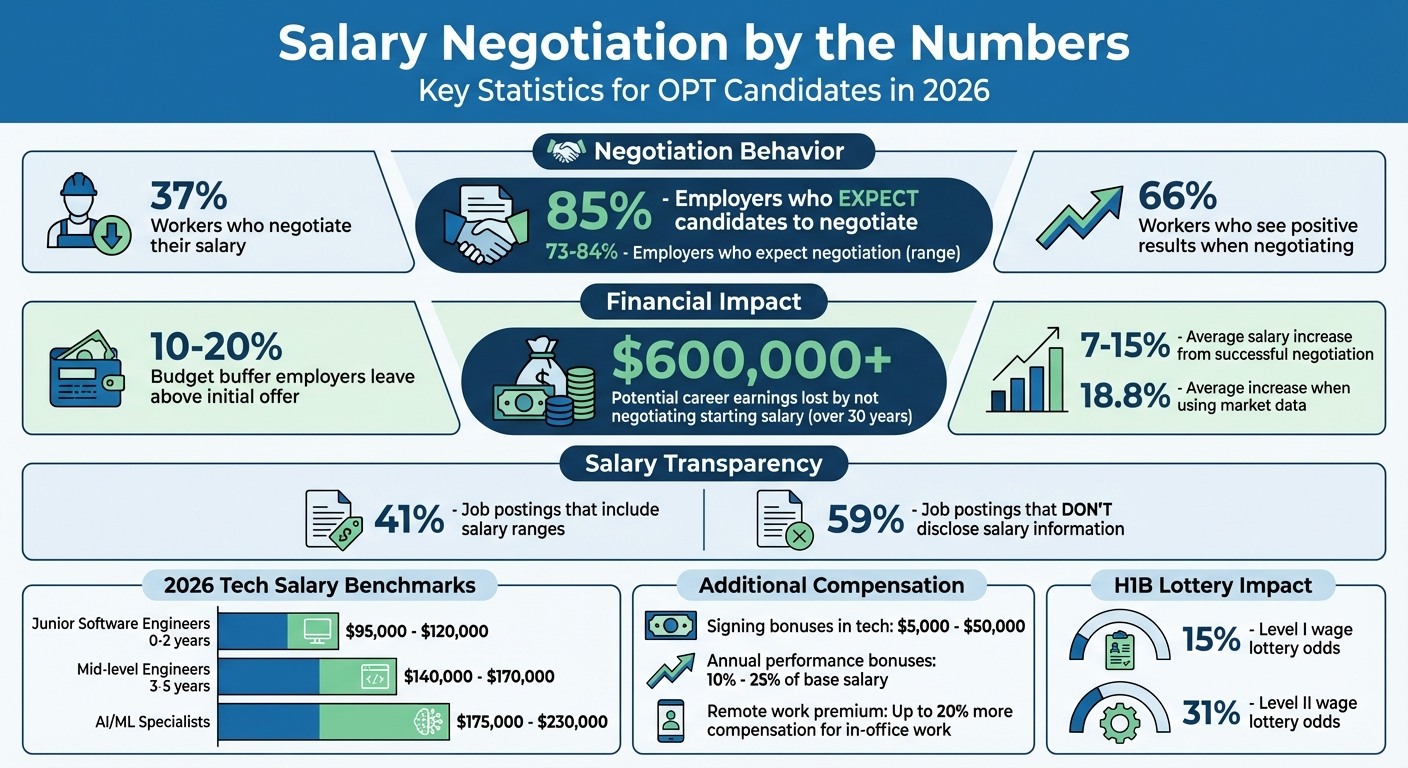
It won't. Hiring managers expect this conversation. Most have a number they offer and a number they're actually authorised to pay, and the gap between those two figures is often wider than people assume. Not negotiating doesn't make you easier to work with — it just means you're paying a tax for staying silent, and that tax compounds. Every raise, every bonus, every future offer that gets benchmarked against your current salary builds on the number you accept today.
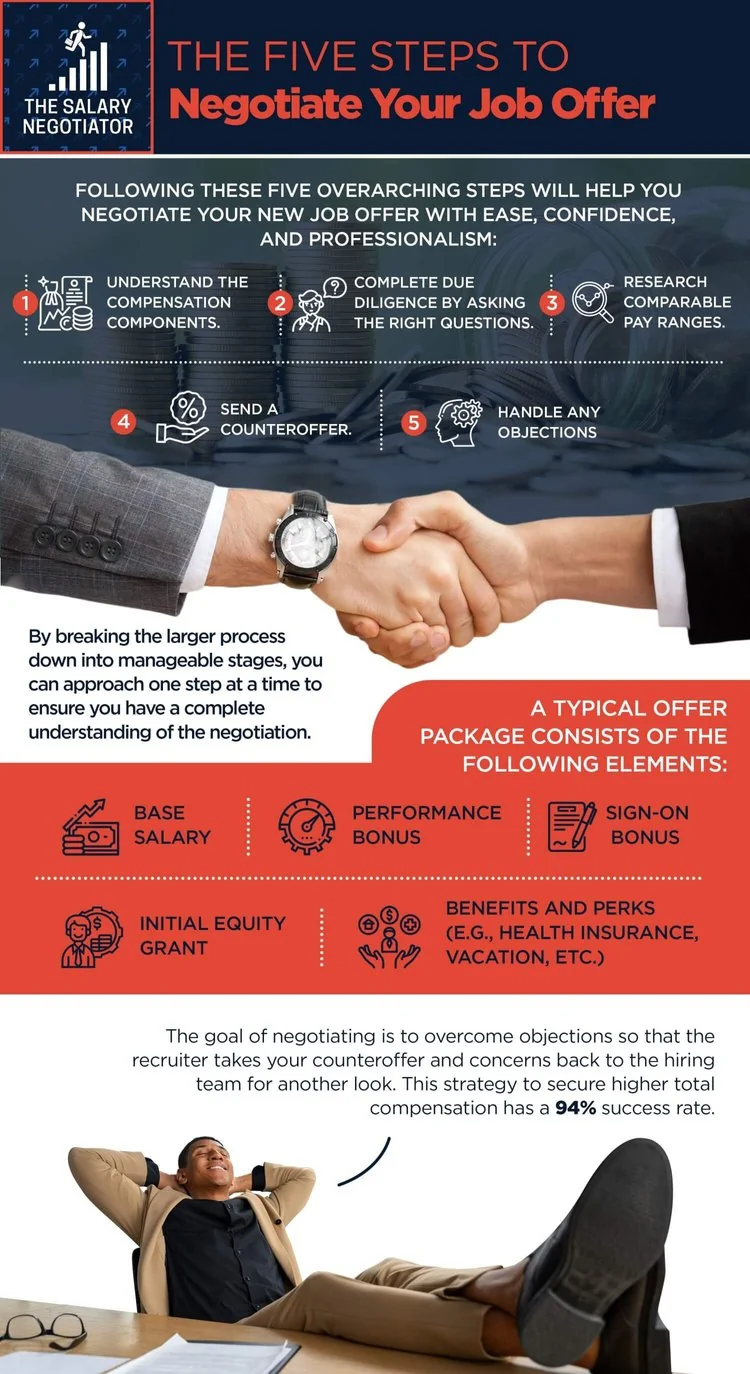
This guide walks through the entire process: how to figure out what you're actually worth, how to build a case that lands, when to have the conversation, and exactly what to say when things get uncomfortable. None of this requires being aggressive or transactional. It requires preparation — and preparation is something almost entirely within your control.
Step 1 — Find out what you're actually worth
Before you can ask for more, you need a number — or really, a range — that's grounded in something other than a gut feeling. This is your market value: what employers in your industry, location, and experience bracket are actually paying for the work you do. Without it, you're negotiating blind, and blind negotiators tend to either lowball themselves out of fear or overshoot in a way that's easy to dismiss.

Research your market value using multiple salary databases and resources before entering any negotiation. Photo: Talent Loop
Several factors shape this range, and they shift more than people expect from year to year: where you're located (remote work has scrambled many traditional geographic pay bands), how many years of relevant experience you have, the size and funding stage of the company, and how tight or loose the hiring market currently is for your specific skill set.
Pull data from multiple salary databases
No single source is perfectly accurate, so triangulate. Government labour statistics tend to be slower-moving but reliable for broad occupational categories. Crowdsourced platforms give you self-reported figures that are often more current but can skew toward certain company sizes or be inflated by outliers. Compensation-focused platforms that aggregate verified offer data tend to be the most useful for tech, finance, and other white-collar roles where total compensation includes equity or bonuses.
Pull at least three sources and look for where the ranges overlap. That overlap zone is your realistic target.
Talk to people who actually do this job
Data tools are useful, but a five-minute conversation with someone in a comparable role often tells you more than an hour of scrolling through salary aggregators. If you have a former colleague, a classmate, or even a loose LinkedIn connection doing similar work at a similar level, ask them directly. People are often more candid about pay than you'd expect, especially if you frame it as "I'm trying to figure out if an offer is fair" rather than "what do you make."
Set up an informational conversation
If you don't have a direct connection, an informational interview — a short, low-pressure conversation with someone established in the role you're targeting — can surface not just pay ranges but also what's negotiable in that specific company or industry culture. Some industries negotiate hard on base salary; others negotiate almost exclusively on bonus structure or equity.
Once you have your range, place your current or offered salary inside it. Are you near the top, the middle, or the bottom? That single data point tells you how much leverage you realistically have and whether your ask should be modest or substantial.
Watch: Evidence-based salary negotiation tips you can use in your next conversation.
A note on pay equity — know where you stand
Pay disparities along lines of gender, race, disability status, and other identity markers are well documented and persistent. These gaps don't close on their own, and they're rarely the result of one dramatic decision — they tend to accumulate quietly across years of slightly-lower starting offers and slightly-smaller raises.
In the United States, federal anti-discrimination law prohibits employers from setting pay based on protected characteristics including race, sex, national origin, age, and disability. You're not asking for a favour when you negotiate. You're asking to be paid in line with the market, which is something you're entitled to regardless of who you are.
If you suspect you've been underpaid relative to peers in similar roles, the market research from Step 1 becomes even more important. A well-documented gap between your pay and the market rate is one of the strongest, most neutral arguments you can bring to the table — it shifts the conversation away from anything personal and squarely onto numbers.
Browse Live Job Openings Curated by Talent Loop
Our jobs board surfaces active opportunities where negotiation headroom is real — across tech, finance, marketing, and operations. The best roles move fast, so don't wait.
Browse Live Job Openings ?Step 2 — Think beyond the base number
Salary is the headline, but it's rarely the only line item that can move. Many companies have tighter constraints on base salary bands — set by HR systems, pay grade structures, or budget approvals — than they do on the softer perks that sit around the edges.
Before your conversation, think through what would actually improve your life if the base number doesn't move as much as you'd like. Some of the most commonly negotiable extras include:
- Additional paid time off — even an extra week can be worth more to some people than a modest salary bump
- Signing bonus — often easier to approve than a permanent salary increase, since it's a one-time cost
- Remote or hybrid flexibility — increasingly treated as a negotiable line item in its own right
- Equity or stock options — particularly relevant at startups or pre-IPO companies
- Professional development budget — courses, certifications, conferences
- Earlier performance review — a six-month review instead of twelve, with a raise tied to it
- Title adjustment — costs the company nothing but can matter enormously for your next move
- Relocation or commuting support
- Parental leave or childcare stipends
The base salary is the headline number everyone focuses on. The benefits package is where the real flexibility usually lives.
Step 3 — Build your case
Walking into a negotiation with "I'd like more money, please" is not a pitch. A pitch connects your value directly to the number you're asking for, and it does so in language the other person can actually use to justify the increase internally — because in many cases, the person across the table also has to go convince someone else.

Confidence comes from preparation — document your wins before walking into the negotiation. Photo: Talent Loop
Write down what you've actually done
Sit down and write out your concrete wins — not your job description, your wins. Projects you led, problems you solved, revenue you influenced, time you saved, people you mentored, processes you improved. Use numbers wherever you honestly can. "Reduced onboarding time from six weeks to three" lands very differently than "helped streamline onboarding."
Argue from market value, not personal need
It's tempting to mention that rent went up, or that you'managing new financial pressures at home. Resist this. These things don't tend to land well in a negotiation because they're not the employer's problem to solve — bringing them up can subtly shift the conversation from "this is what I'm worth" to "please help me out." Keep the focus on market value and your demonstrated contribution.
Speak to their pain points, not just your résumé
The strongest negotiators connect "here's what I've done" to "here's what you need, and here's why I'm the answer to that." If you know the team is struggling with a particular bottleneck, or the company is entering a phase where your specific skill set becomes more critical, name that directly. You're not just asking for more money; you're making the case that paying you more is good business.
Step 4 — Pick your moment
Timing affects leverage more than most people realise, and the right timing looks different depending on whether you're negotiating a new offer or a raise at your current job.
If you're negotiating a job offer
Don't try to negotiate during the interview process itself, before an offer exists — there's nothing concrete to negotiate yet. The right window opens once you have a written offer in hand. At that point, you have more leverage than at almost any other point in the relationship: the company has already invested time, made a decision, and wants to close.
Take the time you're given (most companies expect you to ask for a few days) to actually evaluate the offer, then reach out — ideally a few days before any deadline — to say you're excited about the role and would like to discuss the compensation package before finalising.
If you're negotiating a raise in your current role
Two things matter here: company context and calendar timing. If you've recently delivered something visible and well-received, that's a natural opening. If the company just went through layoffs or a rough quarter, pushing hard for a raise right then is unlikely to land well.
On calendar timing, most companies set compensation budgets well before formal review cycles happen. If you wait until your actual performance review to bring up a raise, you may be asking after the relevant budget decisions have already been made. Start the conversation three to four months ahead of your review cycle, so your case can actually influence the numbers being planned.
Step 5 — Practice until it feels boring
This step gets skipped constantly, and it's one of the cheapest ways to dramatically improve your odds. The first time you say your pitch out loud should not be in front of the person who controls your paycheck.
Run through the conversation with a friend, partner, or mentor — ideally someone who will push back a little. If you don't have a willing practice partner, record yourself on your phone and play it back. Pay particular attention to how you respond to pushback. Most people rehearse their opening pitch and completely skip rehearsing what happens when the other person says "I don't think we can do that." That's the moment that actually determines the outcome, so practise it specifically.
During the conversation: project calm authority
Project confidence through posture, measured speech, and strategic silence. Photo: Talent Loop
Confidence in a negotiation isn't about bravado — it's about not flinching when the conversation gets uncomfortable, because it will, even when it goes well. A few physical and verbal habits help signal this without saying a word about it:
- Sit with an open, upright posture — not stiff, just present
- Keep your arms uncrossed; crossed arms read as defensive even when you don't feel defensive
- Maintain eye contact, especially when stating your number
- Slow down. Nervous speech speeds up; deliberate speech sounds confident
- Use pauses. Silence after you've made your ask is not a problem to fill — let it sit
Stay warm — this isn't a courtroom
One of the biggest misconceptions about salary negotiation is that it has to feel adversarial. It doesn't, and treating it that way often backfires. The person across the table is, in most cases, not your opponent — they're someone trying to bring you on board while also managing constraints you can't see.
- Open by thanking them for their time and reiterating that you're genuinely excited about the role
- Keep your tone conversational, not transactional — this is a discussion, not a demand
- Stay calm even if the response isn't what you hoped for; frustration rarely helps your case
- Practise active listening — actually respond to what they say rather than just waiting for your turn to repeat your number
Being kind and being firm are not opposites. In fact, the combination — warm but unmoved — tends to be far more effective than either coldness or eagerness to please.
Anchor high, land where you want
There's a well-documented psychological phenomenon called the anchoring effect: the first number mentioned in a negotiation tends to set the gravitational centre for everything that follows, even when both sides know it's just an opening position. This is why, whenever possible, you want to be the one who names a number first — and why that number should sit above your actual target.
Watch: Why the first number in a negotiation has outsized psychological influence.
A reasonable approach is to open somewhere around 10 to 20 percent above your real target. This gives the other side room to counter without the final number landing below what you actually wanted. If you open exactly at your target, the only place the conversation can realistically go is down.
Your opening number should still be defensible by your market research — if it's wildly out of step with reality, it can undercut your credibility rather than anchor the conversation in your favour. The goal is "ambitious but justifiable."
Not sure if your current salary is competitive?Use our free career assessment to benchmark your position in the market.
Take Free Assessment ?Handling pushback and counteroffers
Almost no negotiation goes in a straight line. Expect at least one round of "we can't do that," and have a plan for it that doesn't involve immediately backing down or digging in defensively.
The key is to stay firm on your underlying goal — being paid in line with your value — while staying flexible on exactly how that goal gets met. If the base salary genuinely can't move, that's the moment to pivot toward the non-salary items from Step 2.
"Honestly, I don't think we have room to move on that number right now."
You"I appreciate you being straight with me about that. I do want to flag that the number I mentioned reflects what I'm seeing for similar roles at this level, and I'd really like to find a way to get closer to that — whether that's on the base salary itself or somewhere else in the package. What flexibility do you have?"
Employer"Let me see what we can put together. It might not hit that number directly, but there could be some other options."
Notice what this script does: it doesn't accept the first "no" as final, but it also doesn't escalate into conflict. It restates the basis for the ask (market value, not personal preference), and it explicitly opens the door to creative solutions rather than insisting on one specific outcome.
If they come back with a lowball
Sometimes the counter is so far from your number that it feels almost insulting. Resist the urge to react in the moment. Instead, treat it as information: either the company has less flexibility than you assumed, or they're testing how firm your number actually is. Restate your reasoning calmly, ask what's driving the gap, and consider whether there's a smaller, more specific ask — a single benefit, a faster review timeline — that might be easier for them to say yes to as a starting point.
After the negotiation: what comes next
Success — but get every agreement in writing before celebrating. Photo: Talent Loop
Eventually, the conversation ends — either with a yes, a partial yes, or a no. All three outcomes deserve a clear-headed next step.
If you got what you asked for, get it in writing before you celebrate too hard. Verbal agreements about compensation have a way of getting fuzzy by the time HR formalises paperwork, so a quick follow-up email summarising what was agreed protects everyone.
If you got a partial win — which is the most common outcome — take a moment before deciding whether it's enough. It's easy to feel disappointed in the room and then realise later that the package, taken as a whole, actually does meet your needs. Give yourself at least a day before responding if you can.
If you didn't get anywhere, ask whether there's a path to revisit the conversation — tied to a specific milestone, a future review, or a defined timeline — and get that commitment in writing if possible. The skills you build in one negotiation carry forward into every future one, and the discomfort tends to shrink each time.
Common mistakes that quietly cost people money
| Mistake | Why it hurts | What to do instead |
|---|---|---|
| Accepting the first offer immediately | Signals you'll accept whatever's offered, removing any incentive to improve it | Ask for time to review, even just 24–48 hours |
| Naming a number without research | Undermines credibility and can anchor you below market | Build a range from at least three sources before the conversation |
| Leading with personal financial need | Reframes the conversation as a favour rather than fair value | Lead with market data and demonstrated contribution |
| Treating it as one-shot, all-or-nothing | Closes off creative solutions on benefits, timing, or title | Stay flexible on form, firm on overall value |
| Negotiating only at the very end | Misses budget cycles for raises; misses leverage windows for offers | Time the conversation deliberately, per Step 4 |
| Getting agreements verbally only | Details can get lost or changed before paperwork is finalised | Follow up in writing summarising what was agreed |
Watch: Additional salary negotiation strategies to round out your approach.
Frequently Asked Questions: Salary Negotiation in 2026
Ready to Land the Role — and the Salary — You Deserve?
Browse Talent Loop's curated job board and apply to roles where your skills command real market value. Our team is dedicated to helping you negotiate the offer that's right for you.
Browse Open Roles Now ?